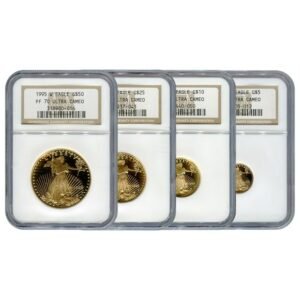

A portfolio can look well diversified on paper and still be heavily exposed to the same risks. Stocks depend on earnings, bonds depend on interest rates and credit conditions, and cash steadily loses purchasing power when inflation runs hot. Gold bullion investing appeals to people who want part of their wealth held in a physical asset with no issuer, no earnings report, and no promise from a third party.
That distinction is the starting point. Physical gold bullion is not a substitute for every other investment, and it should not be treated like a short-term trade unless that is your specific objective. Its role is usually more disciplined than that. Investors buy bullion to preserve wealth, reduce dependence on paper assets, and hold something globally recognized for its purity, liquidity, and monetary history.
Why gold bullion investing still matters
Gold has a long record as a store of value, but that phrase can sound abstract until markets become unsettled. When inflation erodes the buying power of cash, when financial markets move sharply, or when confidence in institutions weakens, investors often revisit hard assets. Gold does not solve every portfolio problem, but it can offset certain kinds of risk that conventional assets do not handle well.
Physical bullion also carries a feature many financial products cannot offer – direct ownership. If you hold investment-grade bars or coins, you own the metal itself. There is no fund manager, counterparty structure, or business balance sheet between you and the asset. For many buyers, that is the point. They are not only seeking price exposure. They are seeking control, portability, and a form of wealth that exists outside the banking system.
That said, the case for gold is strongest when it is approached with realistic expectations. Gold can rise sharply, but it can also go through long periods of flat or negative performance. It does not pay income, and its market price can be volatile in the short run. Gold bullion investing makes the most sense when it serves a clear strategic purpose inside a broader plan.
What counts as investment-grade gold bullion
Not all gold products are equally suitable for investors. Investment-grade bullion generally refers to bars and coins produced to recognized purity standards by respected government mints or established private refiners. In most cases, that means gold with high purity, clear weight markings, and broad market recognition.
Recognition matters because it affects resale. A one-ounce gold bar from a well-known refiner or a government-issued bullion coin is usually easier to verify, price, and liquidate than a niche product with limited market familiarity. Investors are not just buying metal content. They are also buying trust in the product’s origin, specifications, and market acceptance.
This is where disciplined sourcing matters. Dealers focused on investment-grade bullion tend to emphasize authenticity, assay-backed products where applicable, transparent premiums, and insured delivery. Those details are not minor operational points. They are central to preserving the value and marketability of the asset you are buying.
Coins or bars in gold bullion investing?
The choice between coins and bars depends on budget, liquidity preferences, and how you expect to build your position over time. Coins often carry slightly higher premiums than larger bars, but they can offer flexibility. Popular one-ounce bullion coins are widely recognized and easy to sell in smaller increments. For first-time buyers, that familiarity can be useful.
Bars often become more cost-efficient as size increases. A larger bar may carry a lower premium per ounce than several smaller products with the same total weight. For investors focused on maximizing ounces acquired for a given budget, bars can be an efficient route.
The trade-off is flexibility. If you own one large bar and need to liquidate part of your holding, you cannot divide it. Smaller denominations make partial sales easier, but they may cost more upfront on a per-ounce basis. There is no universal winner here. Investors building a core allocation often mix formats, using smaller products for flexibility and larger bars for premium efficiency.
How pricing works
Gold bullion pricing is built on two components: the underlying spot price of gold and the premium charged over spot. Spot reflects the market value of raw gold, while the premium covers refining, minting, distribution, handling, and dealer operating costs. Product type, brand recognition, size, and market demand all influence that premium.
This is why two products with the same gold weight may not cost the same. A globally recognized sovereign coin may command a different premium than a cast bar from a private refiner. During periods of intense demand, premiums can expand even if the spot price is stable. That can frustrate buyers who focus only on the headline market price.
A disciplined investor looks at total acquisition cost, not spot alone. Transparent pricing matters because it allows a clear comparison across products and dealers. It also helps set reasonable expectations about resale. When buying physical bullion, understanding the premium structure is part of understanding the investment itself.
Storage and security are part of the investment decision
Owning physical gold introduces a practical issue that paper gold does not: storage. That is not a drawback so much as a responsibility. If direct ownership is the benefit, secure custody is the obligation that comes with it.
Some investors prefer home storage for immediate access and personal control. Others use professional vaulting or secure third-party storage to reduce household risk and improve insurance options. The right approach depends on the size of the holding, privacy preferences, and risk tolerance.
What matters is that storage should be planned before purchase, not after. Gold bullion investing is most effective when the chain of custody remains clear, the products stay in good condition, and documentation is preserved. Original packaging, invoices, assay certificates where relevant, and secure handling practices can all support smoother resale later.
When to buy gold bullion
This question often creates unnecessary hesitation. Investors wait for the perfect entry point, then watch the market move without them. Gold prices are influenced by inflation expectations, central bank activity, real interest rates, currency movements, and global uncertainty. No one consistently times all of those factors well.
For long-term buyers, a more practical approach is to decide why the allocation exists and then build it methodically. Some investors make one larger purchase when they want immediate exposure. Others average in over time to reduce the pressure of short-term price swings. Neither method is automatically better. It depends on your cash position, conviction, and tolerance for volatility.
If gold is being purchased as financial insurance and wealth preservation, waiting for a perfect price can undermine the purpose. The more useful question is often not whether today is the exact bottom, but whether your portfolio currently has the hard-asset exposure you want.
Common mistakes new buyers make
The first is buying based only on excitement about the gold price. A disciplined purchase starts with allocation size, product choice, storage, and exit flexibility. The second is overlooking premiums and choosing products that are harder to resell. The third is buying from sources that do not inspire confidence on authenticity, shipping protection, or pricing transparency.
Another mistake is treating bullion like a lottery ticket. Gold can appreciate, sometimes significantly, but its primary value for many investors is defensive. It can help preserve purchasing power and reduce concentration in financial assets. That role becomes clearer when expectations are grounded.
New buyers also tend to underestimate how much product recognition matters. Widely traded bars and coins from respected mints and refiners generally make ownership simpler from start to finish. For most investors, simplicity is an advantage, not a compromise.
Building a position with confidence
The strongest bullion decisions are usually the least emotional. Start with the role gold should play in your overall holdings. Decide whether you want flexibility, lower premiums, or a balance of both. Focus on investment-grade products with recognized purity standards and straightforward pricing. Then make sure the delivery and storage side of the transaction meets the same standard of care as the purchase itself.
For investors who value direct ownership, gold remains one of the clearest ways to hold a tangible monetary asset. A trusted dealer such as Omega Bullion Vault can help reduce uncertainty by offering recognized bullion products, transparent pricing, and insured delivery, but the larger principle is simple: buy with a plan, buy products the market understands, and store them as carefully as you selected them.
Markets will keep changing. Rates will rise and fall, currencies will strengthen and weaken, and risk sentiment will shift with every cycle. Physical bullion is not designed to chase every move. It is there so part of your wealth rests on something solid when the rest of the financial system feels less certain.