
Gold tends to get the most attention when confidence feels thin – inflation runs hot, markets swing hard, or geopolitical risk starts affecting asset prices. That is usually when new buyers begin searching for a physical gold investment guide, not because they want speculation, but because they want an asset they can actually own. Physical gold serves a different purpose than a growth stock or a high-yield trade. It is often bought for stability, diversification, and long-term purchasing power.
That distinction matters at the start. Physical gold is not designed to produce income, and it does not move in a straight line. Its value in a portfolio comes from scarcity, global recognition, and the fact that it is a tangible asset with no issuer risk. For investors who want direct ownership outside the financial system, that feature is the point.
What a physical gold investment guide should help you decide
The first decision is not whether gold has value. Most buyers already accept that. The real question is how physical gold fits your objective. Some investors want a hedge against inflation. Others want a store of wealth that can be passed on, held privately, or kept outside conventional market exposure. A serious purchase starts by defining that use case.
Once the goal is clear, product selection becomes easier. If the priority is liquidity, widely recognized bullion coins and bars often make the most sense. If the focus is low premiums per ounce, larger bars may be more efficient. If flexibility matters, smaller denominations can be easier to sell in stages, though they often carry higher premiums relative to spot.
This is where first-time buyers sometimes overcomplicate the process. Gold ownership is straightforward when you focus on a few fundamentals: purity, recognition, pricing, storage, and dealer credibility. Those factors matter more than short-term market noise.
Choosing the right type of physical gold
Not all gold products are equally practical for investors. Jewelry may contain gold, but it is generally not the cleanest route for investment because design, labor, and retail markup can outweigh bullion value. For investment purposes, the market usually centers on bullion coins and bars.
Bullion coins are popular because they combine recognized weight and purity with strong resale appeal. Products from major government mints tend to be easy for buyers and dealers to identify, which can support liquidity. They may carry slightly higher premiums than larger bars, but many investors accept that trade-off for recognizability and flexibility.
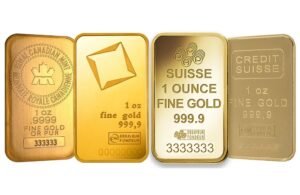
Gold bars often appeal to buyers who want to maximize ounces for their budget. Bars from respected private and sovereign mints can offer efficient exposure to gold with lower premiums per ounce, especially in larger sizes. The trade-off is that larger bars reduce divisibility. Selling a 10-ounce bar is different from selling ten 1-ounce coins.
Fractional gold sits in the middle. Smaller weights can make entry easier and can help investors build a position gradually. They can also offer practical flexibility in resale. The downside is cost efficiency. On a per-ounce basis, fractional pieces usually carry higher premiums than 1-ounce products.
Purity, authenticity, and why recognized sourcing matters
A physical gold investment guide is incomplete if it does not address verification. Investors are not only buying metal. They are buying confidence in what they receive. That means purity standards, product integrity, and a documented chain of trust matter from the beginning.
Investment-grade gold is typically offered in high purity levels, often .999 or .9999 fine depending on the product. Beyond the number itself, the source matters. Bullion from internationally recognized mints and refiners tends to command stronger trust because the market already understands those standards.
This is one of the clearest reasons to work with an established dealer. Authenticity is not just a product feature. It is a transaction standard. Serious dealers build their reputation on transparent specifications, recognized sourcing, and secure handling. For investors, that reduces uncertainty at the exact point where uncertainty should be lowest.
Understanding price: spot, premium, and timing
Many new buyers focus only on the gold spot price. That is useful, but it is not the full purchase price. Physical bullion trades at a premium above spot, and that premium reflects manufacturing, distribution, demand conditions, and product type.
A one-ounce coin from a major mint will usually cost more than the raw metal value alone. That does not make it overpriced. It reflects the reality of producing a trusted, marketable investment product. In the same way, smaller denominations often cost more per ounce because fabrication costs are spread over less gold.
Timing also deserves a balanced view. Investors often wait for the perfect entry point and end up delaying too long. Gold prices can pull back, but they can also move quickly during periods of stress. For long-term buyers, averaging into a position over time may be more practical than trying to predict short-term bottoms. It depends on your capital, your time horizon, and whether you are building a core holding or making a one-time allocation.
Storage is part of the investment decision
Owning physical gold means planning for secure storage before the order arrives. This is not a detail to sort out later. Storage affects convenience, privacy, insurance, and peace of mind.
Some investors prefer home storage because it provides immediate access and direct control. That can work, but it also places full responsibility on the owner. Security measures need to be taken seriously, and insurance may not automatically cover bullion in a meaningful way.
Others prefer professional storage because it adds institutional-grade safeguards and can reduce personal handling risk. The right choice depends on the size of the position, access preferences, and your broader asset protection plan. There is no universal answer, but there should always be a deliberate one.
How much gold should you own?
This is where discipline matters more than enthusiasm. Gold can play a valuable role in a portfolio, but allocation should reflect your total financial picture. For many investors, gold is a diversifier rather than a single-asset strategy. It can complement cash reserves, equities, fixed income, real estate, and other hard assets.
The right percentage varies. A cautious buyer may start small and increase exposure over time. A more experienced investor with concerns about currency risk or market instability may choose a larger allocation. What matters is that the position fits your objectives, liquidity needs, and tolerance for price fluctuations.
Buying too much too quickly can create pressure if you need to raise cash during an unfavorable market window. Buying too little may leave you without the level of hard asset protection you were seeking. A measured approach usually works better than an emotional one.
A practical physical gold investment guide for first purchases
For a first purchase, simplicity is often the strongest strategy. Start with a well-known bullion coin or bar in a size that fits your budget without strain. Focus on products with clear weight and purity specifications from recognized mints or refiners.
Before purchasing, review the full price, not just the spot chart. Confirm product details, delivery protections, and the dealer’s standards for authenticity and insured shipping. Investors should know exactly what they are buying, what they are paying, and how the product will arrive.
It also helps to think ahead about resale even if you do not plan to sell soon. Products that are widely recognized today are generally easier to liquidate later. That is one reason many investors favor standard bullion formats over niche items with narrower demand.
A dealer such as Omega Bullion Vault can be valuable here because the purchase is not only about inventory. It is about removing uncertainty around sourcing, pricing transparency, and secure fulfillment.
Common mistakes to avoid
The most common mistake is chasing novelty over liquidity. Fancy designs and obscure products can be appealing, but investment buyers usually benefit more from recognized bullion with consistent market demand.
Another mistake is treating premium as the only measure of value. Lower premiums matter, but not if they come at the cost of weaker recognition, questionable sourcing, or a less trusted transaction. Paying slightly more for stronger market acceptance can be the smarter long-term choice.
Finally, some buyers overlook logistics. Storage, insurance, delivery security, and documentation should all be considered part of the investment. Physical ownership works best when the full chain – purchase, receipt, storage, and eventual resale – has been thought through in advance.
Gold has held its place for generations because it answers a basic investor need: owning something tangible, finite, and widely trusted when certainty is in short supply. The smartest way to buy it is not with urgency, but with standards.