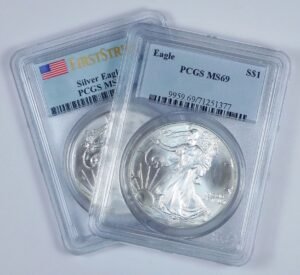

A gold IRA versus home storage decision is not simply a question of where gold feels safest. It is a question of account rules, tax treatment, access, insurance, and what type of ownership you actually want. Physical gold held personally can offer direct control. Gold held inside an IRA can provide tax advantages. Trying to combine both without understanding the distinction can create unnecessary retirement-account risk.
For investors building long-term protection against inflation, currency weakness, and market uncertainty, both approaches can have a role. The right choice depends on whether the metal is retirement capital subject to IRS rules or personally owned bullion purchased with after-tax dollars.
Gold IRA Versus Home Storage: The Core Difference
A gold IRA is a self-directed individual retirement account that holds IRS-approved physical precious metals. The account is administered by a qualified custodian, and the metals must generally be held by an approved depository. The investor owns the IRA, while the IRA itself owns the bullion.
Home storage usually means personally holding coins or bars at a residence, private safe, or another location under the owner’s direct control. This can be an effective arrangement for bullion purchased outside a retirement account. The owner can inspect it, access it, and decide when to sell it without involving an IRA custodian.
The problem begins when a retirement investor assumes that IRA gold can be delivered to a home safe while remaining inside the IRA. In most conventional cases, that is not how the rules work. Taking personal possession of IRA assets may be treated as a distribution or prohibited transaction, potentially making the account taxable and, for some investors, subject to additional penalties.
Why Gold IRA Assets Are Usually Stored at a Depository
The tax benefits of an IRA come with custody requirements. A traditional gold IRA may allow tax-deferred growth, while a Roth gold IRA may offer qualified tax-free withdrawals. In exchange, the account must follow rules governing eligible assets, custodianship, reporting, and distributions.
For physical metals, a qualified trustee or custodian is generally responsible for maintaining the assets. Approved depositories provide specialized storage, inventory controls, insurance coverage, audit procedures, and secure logistics. Depending on the arrangement, investors may choose segregated storage, where specific bars or coins are identified for their account, or non-segregated storage, where like-kind metal is stored collectively.
This structure can feel less immediate than a home safe, but it addresses risks that become more significant as holdings grow. Large bullion positions can be difficult to insure adequately at home. They may also create privacy concerns, introduce theft risk, and complicate estate administration. A professional depository is designed to protect substantial precious metals holdings under controlled conditions.
The Home Storage IRA Claim Requires Caution
Some promoters describe a “home storage IRA” structure, often involving an IRA-owned limited liability company. The premise is that the investor manages the LLC and stores metals personally. These arrangements are often marketed as a way to obtain IRA tax treatment while retaining direct possession.
Investors should approach those claims carefully. The IRS has not issued a broad approval allowing IRA owners to keep IRA-owned bullion at home simply because an LLC is involved. Whether a particular structure complies can depend on its facts, governing documents, custody arrangements, and prohibited-transaction rules. A setup that fails scrutiny can result in the IRA being treated as distributed, with tax consequences that may be severe.
Before pursuing any nonstandard structure, speak with a qualified tax professional or attorney who understands self-directed retirement accounts. Marketing language is not a substitute for individualized legal or tax advice.
When Personally Held Gold May Be the Better Fit
Home storage can be entirely appropriate when the gold is owned personally and is not part of an IRA. This route appeals to investors who value immediate access and direct custody over retirement-account tax treatment.
Personally owned bullion is also straightforward. You purchase recognized, investment-grade coins or bars, take insured delivery, verify the products, and store them according to your own security plan. There is no custodian fee, no depository agreement, and no IRA reporting requirement. When you sell, any applicable tax treatment is based on your personal investment position rather than IRA distribution rules.
Direct ownership is often useful for an investor who wants a reserve of liquid physical metal outside the financial system. Common choices include widely recognized gold coins and bars with clear purity standards and strong resale markets. Product recognition matters because it can make authentication, pricing, and future liquidation more efficient.
That freedom also creates responsibility. A home safe should be properly rated, securely installed, and kept confidential. Investors should consider specialized insurance, detailed purchase records, discreet delivery procedures, and an estate plan that identifies the assets without broadly disclosing their location. A small personal allocation may be manageable at home. A larger position may justify professional vault storage even when it is not held in an IRA.
Comparing Control, Costs, and Access
The best structure is not necessarily the one with the lowest visible fee. It is the one that protects the purpose of the assets.
A gold IRA requires expenses that personal ownership may not. These can include account setup, annual custodian administration, storage, insurance, and transaction fees. In return, the investor receives a retirement-account framework, professional custody, and depository-grade security. For investors whose priority is preserving tax-advantaged retirement assets, these costs may be reasonable.
Home storage avoids annual IRA custody costs but can create other expenses. A high-quality safe, alarm upgrades, insurance riders, and secure storage practices all have a cost. Those costs are sometimes overlooked because they are not presented as an annual account statement fee. They should still be included in a realistic comparison.
Access is another meaningful difference. Personally held gold is accessible immediately, although selling still requires finding a reputable buyer or dealer and arranging insured shipment or delivery. Gold in a depository takes more coordination to sell or distribute, but the metals are already within a professional chain of custody. That can simplify liquidation for investors who value documented handling, verification, and secure transfer.
Eligible Gold Matters Inside an IRA
Not every gold product qualifies for an IRA. IRS rules generally require specific fineness standards, and collectible coins are often excluded, though certain widely traded bullion coins may be permitted. The product selection should be confirmed before purchase, not after funds have been committed.
For personally held gold, investors have more flexibility, but investment discipline still matters. Recognized bullion bars and coins tend to offer clearer purity, more transparent pricing, and stronger liquidity than obscure products or heavily promoted collectibles. Premiums, brand recognition, condition, and bar size can all affect resale value.
For either approach, work with bullion products sourced from established mints and refiners, with clear specifications and documented authenticity. The objective is not merely to own gold. It is to own gold that is easy to verify, protect, and sell when the time comes.
A Practical Decision Framework
Start by identifying the source of the funds. If you are rolling over retirement assets or making an IRA contribution, assume the gold needs qualified custodial storage unless your tax and legal advisers confirm otherwise. Do not arrange personal delivery of IRA metals based on a verbal assurance or a promotional claim.
If you are buying with personal savings, decide how much direct access you truly need. A modest amount of personally held bullion can support emergency preparedness and direct ownership goals. A larger allocation may be better served by an insured professional vault, where security and inventory controls are stronger.
It can also be reasonable to use both approaches. An investor may hold a portion of gold in a properly structured IRA for long-term retirement planning while keeping a separate, personally owned allocation outside the IRA. The key is to keep the ownership records, funding sources, and storage arrangements clearly separated.
Protect the Structure Before You Buy
Gold can serve different purposes in the same household: retirement diversification, long-term wealth preservation, liquidity, and personal custody. Confusion arises when one type of ownership is treated as though it carries the benefits of another.
A disciplined investor treats gold IRA custody as a compliance decision and home storage as a personal-security decision. Establish the purpose of the metal first, choose recognized bullion suited to that purpose, and use a storage arrangement that protects both the asset and the structure around it.