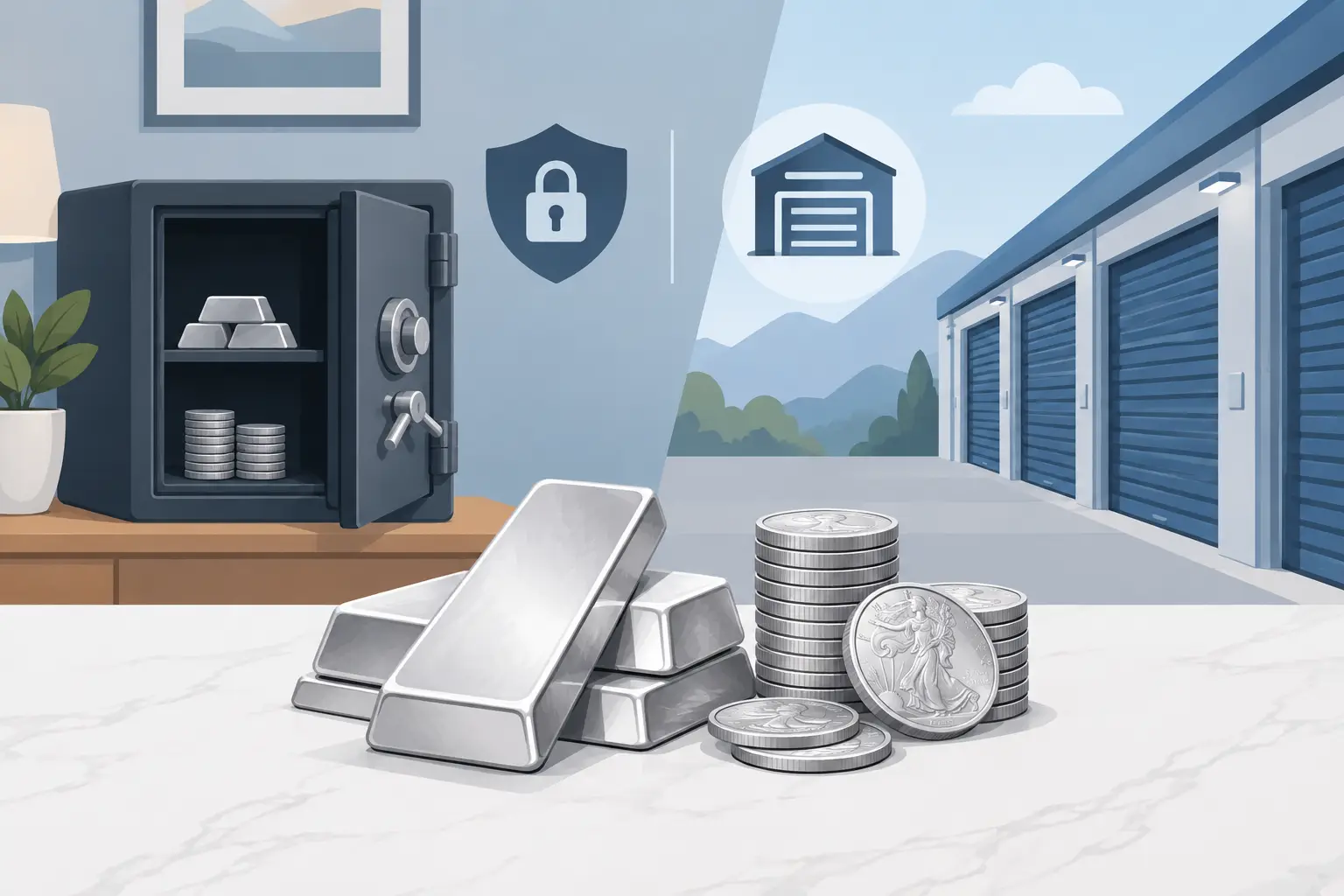
A silver position is only as secure as the plan behind it. Knowing how to store silver safely means protecting more than the metal itself: it means preserving clear ownership, maintaining condition, limiting unnecessary access, and ensuring your holdings remain available when you need them.
Silver is bulky relative to its value, particularly when compared with gold. A meaningful allocation of one-ounce coins, 10-ounce bars, or larger wholesale bars can take up considerable space and weight. That practical reality should shape your storage decision from the start. The right solution depends on the size of the holding, your location, your insurance needs, and how quickly you may want access to your bullion.
Start With the Risks That Matter
Safe silver storage is not one decision. It is a set of controls designed to address theft, fire, water damage, loss, and environmental exposure. The priority is not to create an elaborate hiding place. It is to choose a storage arrangement that matches the value and volume of the assets you own.
Physical theft is the most obvious concern, but it is not the only one. Silver can tarnish when exposed to sulfur compounds, moisture, and unsuitable packaging materials. Flooding and fire can damage labels, assay cards, original mint packaging, and records even when the metal itself survives. Poor documentation can also complicate an insurance claim or estate transfer.
A disciplined plan accounts for all of these risks. It also avoids concentrating every ounce in a single location when the size of the holding justifies diversification.
How to Store Silver Safely at Home
Home storage offers direct possession and immediate access. For investors who value having a portion of their assets close at hand, it can be an appropriate solution. It does, however, require stronger security measures than a dresser drawer, closet shelf, or obvious household safe.
A quality safe should be heavy, professionally rated, and anchored to the structure of the home. Look for burglary resistance as well as fire and water protection. A lightweight safe that can be carried out of the house offers limited real-world protection, regardless of its lock type. Placement matters as well. A discreet, structurally sound location is generally more prudent than a visible area such as a primary bedroom closet or home office.
Avoid discussing the location or size of your holdings. This includes casual conversations with visitors, contractors, and even well-meaning acquaintances. Physical security is strengthened by privacy. The fewer people who know that bullion is stored in the home, the lower the chance that your holdings become a target.
Home storage works best for a modest allocation or for bullion you want readily available. Once the value or volume reaches a level where loss would materially affect your financial position, a private vault may provide a more appropriate level of protection.
Do Not Rely on Improvised Hiding Places
Hidden storage can add a layer of discretion, but it should not replace a proper safe or professional facility. Common hiding places are often predictable to experienced thieves and may expose silver to moisture, cleaning chemicals, temperature swings, or accidental disposal.
If you use a concealed location as part of a broader plan, choose one that remains dry, stable, and known to a trusted person who could access it in an emergency. Do not place bullion where it could be confused with scrap metal, donation items, or ordinary household contents.
Protect Silver From Tarnish and Physical Damage
Investment-grade silver does not need to remain perfectly white to retain its bullion value. Tarnish is typically a surface condition, not a loss of metal content. Still, preserving the appearance and packaging of recognized coins and bars supports orderly resale and helps maintain collector appeal where applicable.
Keep coins in original mint tubes, capsules, or sealed packaging whenever possible. Bars should remain in their original protective sleeves or assay packaging, especially if they are serialized or sealed by a recognized refiner. Unnecessary handling can leave fingerprints and create surface marks.
For loose items, use inert storage materials designed for coins or bullion. Avoid PVC-containing plastic flips, rubber bands, ordinary paper envelopes, and cardboard with unknown chemical content. These materials can trap moisture or release compounds that accelerate toning.
Humidity control is equally useful. Store silver in a dry environment and consider placing silica gel desiccants inside a safe or storage container. Replace or recharge desiccants according to their instructions. Do not store bullion in a damp basement, garage, attic, or shed, where moisture and temperature changes are harder to control.
Handle Bullion With Care
When handling silver, clean cotton gloves or nitrile gloves reduce the risk of fingerprints. Hold coins and rounds by their edges rather than touching the faces. This is particularly relevant for proof coins, limited-mintage products, and collectibles, though it is sensible for standard bullion as well.
If a silver item tarnishes, resist the urge to polish it. Abrasive cleaning can leave hairline scratches and reduce value for collectible pieces. For standard bullion, tarnish usually does not affect weight or purity. When in doubt, leave the item in its existing condition rather than attempting a cosmetic repair.
Consider a Private Vault for Larger Holdings
Professional vault storage can remove several vulnerabilities associated with keeping significant silver holdings at home. A reputable private vault may offer controlled access, monitored facilities, allocated storage, and insurance options designed for precious metals.
The key distinction is allocated versus unallocated storage. Allocated silver is specifically identified and held for you, rather than representing a general claim on a pool of metal. For investors seeking direct ownership of physical bullion, allocated storage provides clearer assurance that their metal is segregated or otherwise specifically recorded under their name.
Before choosing a vault, review how ownership is documented, what insurance applies, who can access the metal, and whether you can take delivery. Ask about auditing procedures, fees, minimum storage requirements, and the facility’s jurisdiction. A low headline fee is less meaningful if the ownership terms are unclear or access is unnecessarily restricted.
Bank safe-deposit boxes can provide privacy, but they are not always the best answer for bullion. Access may be limited to banking hours, contents may not be insured by the bank, and boxes can become inaccessible during certain events. For a small collection, they may be suitable. For a substantial investment position, dedicated precious-metals storage is often more transparent.
Insure the Holdings You Keep at Home
Do not assume a standard homeowners or renters policy fully covers bullion. Many policies impose low sublimits for precious metals, coins, and collectibles, or require a separate rider. Review your policy before a loss occurs, not after.
Ask your insurer whether silver bullion is covered for theft, fire, flood, and transit. Confirm whether coverage is based on purchase cost, replacement value, or another valuation method. You should also understand any security requirements, such as a rated safe, alarm system, or appraisal documentation.
Maintain a confidential inventory with item descriptions, quantities, weights, mint names, serial numbers where applicable, purchase dates, and receipts. Keep a copy separate from the bullion itself, ideally in encrypted digital storage and a secure physical location. Photographs of bars, sealed products, and packaging can also support identification and claims.
Build a Storage Plan Around Liquidity and Privacy
Not every ounce must be stored the same way. Many investors keep a limited amount of recognizable silver coins or smaller bars at home for immediate access, while placing larger holdings in a professional vault. This approach balances convenience with stronger institutional-grade protection.
Product format affects storage decisions. One hundred ounces in one-ounce coins requires more containers and inventory management than the same amount held in larger bars. Larger bars may reduce storage footprint and premium costs, while smaller units can be easier to sell incrementally. Your storage plan should support the form of liquidity you expect to need.
Privacy should not mean poor recordkeeping. Keep purchase documentation, storage records, and access instructions organized. Consider how a spouse, executor, or trusted family member would locate and identify the bullion if you were unavailable. Clear instructions can prevent assets from being overlooked or mishandled during an emergency or estate settlement.
Review Storage as Your Silver Position Grows
A storage arrangement that works for an initial purchase may not be sufficient after several years of accumulation. Review your plan when the value of your metals changes materially, when you move, when your household circumstances change, or when you add higher-value collectible products.
Check the condition of home-stored bullion periodically, but avoid frequent handling. Verify that safe bolts, alarms, desiccants, insurance coverage, and inventory records remain current. If your holding has outgrown your home-security setup, moving part or all of it to allocated professional storage is a practical risk-management decision, not a loss of control.
Physical silver is intended to provide tangible ownership and long-term wealth protection. Store it with the same discipline you used when selecting recognized, investment-grade bullion: protect the asset, document the ownership, and choose a level of security that lets you hold it with confidence.